
Natural Sandstone Cleaning Hampshire | Black Spot Removal

Mobile: 07546 947214
Email: thejetwashfella@outlook.com
Natural sandstone is a beautiful natural stone that can transform a garden, patio, pathway or swimming pool surround. Its natural colours, textures and variations give each installation its own individual character.
However, sandstone is also a porous natural material that can become heavily weathered and contaminated over time.
Algae, moss, lichen, dirt, grime and stubborn black spots can gradually build up on the surface, particularly in shaded or damp areas. Once this happens, the natural colours of the sandstone can become hidden and the surface can look completely different from when it was first laid.
At The Jet Wash Fella, I provide professional natural sandstone cleaning and black spot removal services across Hampshire, using a combination of specialist cleaning treatments, soft washing and carefully controlled pressure cleaning.
The objective isn’t simply to blast the sandstone as hard as possible.
It’s to clean the stone properly while respecting the surface, removing years of dirt and organic growth and bringing the natural colour and character of the sandstone back to life.
Whether you have a sandstone patio, pathway, steps, driveway or swimming pool surround, I can assess the condition of the stone and recommend the most appropriate cleaning approach.
PROFESSIONAL NATURAL SANDSTONE CLEANING ACROSS HAMPSHIRE
Natural sandstone requires a different approach from many other outdoor surfaces.
Every sandstone patio is different. The type of stone, age, condition, previous cleaning, exposure to weather and amount of organic growth can all affect how it should be cleaned.
Some sandstone is relatively hard, while other varieties can be considerably softer and more susceptible to surface damage.
This is why I don’t believe in simply using maximum pressure on every sandstone surface.
Instead, I assess the stone first and use a combination of appropriate cleaning products and controlled pressure to achieve the best practical result.
My sandstone cleaning services can help with:
- Algae and green growth
- Moss
- Lichen
- Black spots
- General dirt and grime
- Weathering
- Organic staining
- Slippery surface contamination
- Dirty and neglected patios
- Weathered pathways
- Swimming pool surround contamination
The exact result will depend on the age, condition and type of sandstone, but the aim is always the same:
To reveal as much of the stone’s natural colour and character as possible without unnecessarily damaging the surface.
WHY DOES NATURAL SANDSTONE DEVELOP BLACK SPOTS?
Black spotting is one of the most common problems people notice on older natural sandstone patios.
The dark marks can be associated with organic growth, lichen, moisture, dirt and environmental contamination that builds up over time.
Because sandstone is porous, contamination can become firmly established within the texture of the stone rather than simply sitting on top.
This is why ordinary brushing or a quick blast with a pressure washer may not produce the result you’re looking for.
Some black spots are considerably more stubborn than others and may require specialist treatment followed by careful cleaning.
CAN BLACK SPOTS BE COMPLETELY REMOVED?
In many cases, significant improvement can be achieved.
However, I won’t promise that every individual mark will disappear completely.
The result depends on factors such as:
- How old the staining is
- How deeply it has affected the stone
- The condition of the sandstone
- Previous cleaning methods
- Weathering and natural deterioration
- The type of contamination involved
My approach is to treat stubborn areas appropriately and remove as much contamination as possible without resorting to unnecessarily aggressive pressure.
NATURAL SANDSTONE PATIO CLEANING IN HAMPSHIRE
A sandstone patio can look completely different after years of algae, moss, lichen and dirt have been removed.
The natural variations within sandstone can be hidden beneath a layer of contamination, making the patio appear dull, grey, green or almost black in places.
Professional cleaning can reveal the colours that were underneath all along.
I clean sandstone patios of different ages, sizes and conditions, from relatively well-maintained patios that simply need freshening up to heavily weathered surfaces that have not been cleaned for many years.
Where appropriate, I can also discuss jointing or repointing if the existing joints have deteriorated.
NATURAL SANDSTONE PATHWAY AND STEP CLEANING
Sandstone pathways and steps can become particularly susceptible to algae, moss and organic growth.
This is not just an appearance issue.
When natural growth becomes established on an outdoor surface, it can contribute to slippery conditions, particularly when the surface is wet.
I can clean sandstone paths, walkways and steps using an approach suited to the condition of the stone.
The surrounding garden and property are also taken into consideration when preparing and carrying out the work.
NATURAL SANDSTONE SWIMMING POOL SURROUND CLEANING
Natural sandstone is a popular choice for swimming pool surrounds because it provides a natural, attractive finish around the pool.
However, pool surrounds are exposed to water, moisture and outdoor contamination, making regular cleaning particularly important.
I provide natural sandstone swimming pool surround cleaning in Hampshire, using specialist cleaning treatments and controlled pressure cleaning where appropriate.
Extra care is taken around the pool itself, surrounding landscaping and joints.
Where required, deteriorated joints can also be assessed for repointing or jointing work as part of the overall project.
SANDSTONE DRIVEWAY CLEANING
Although sandstone is more commonly associated with patios and garden areas, natural sandstone can also be used for driveways and entrance areas.
Vehicle traffic, weathering, dirt and organic growth can all contribute to a tired-looking surface.
Because sandstone can vary significantly in hardness and condition, I assess the surface before deciding how it should be cleaned.
The objective is to remove contamination while taking care not to unnecessarily wear or damage the natural stone.
MY NATURAL SANDSTONE CLEANING PROCESS
1. INSPECTING THE SANDSTONE
Before cleaning begins, I look carefully at the condition of the sandstone.
I check for:
- Moss
- Algae
- Lichen
- Black spots
- General dirt
- Staining
- Surface deterioration
- Loose or damaged areas
- Previous cleaning damage
- Deteriorated joints
This helps determine the most suitable approach.
2. CLEARING AND PREPARING THE AREA
Loose leaves, dirt and debris are cleared before the main cleaning process begins.
Where necessary, surrounding areas are protected and care is taken around plants, walls, furniture and other features.
Good preparation helps produce a better and more controlled clean.
3. APPLYING A SPECIALIST SOFT-WASH TREATMENT
Where appropriate, I apply a specialist cleaning product to the sandstone.
The treatment is allowed to dwell and work on the organic contamination rather than immediately trying to remove everything with high pressure.
This can be particularly useful where algae, moss, lichen or black spotting has become established.
4. CAREFUL PRESSURE CLEANING
Once the cleaning treatment has had time to work, I carefully pressure clean the sandstone.
The amount of pressure used depends on the condition and type of stone.
I don’t simply turn the machine up to maximum pressure and hope for the best.
Natural sandstone needs controlled cleaning.
5. RE-TREATING STUBBORN AREAS
Some areas of sandstone will be considerably more contaminated than others.
Stubborn black spots, lichen and heavily affected areas may require additional treatment.
Where necessary, I repeat the cleaning process rather than simply increasing the pressure.
6. FINAL CLEAN AND INSPECTION
After the main cleaning has been completed, I inspect the sandstone to make sure the surface has been thoroughly cleaned.
The aim is to leave the stone looking significantly cleaner while retaining its natural appearance and character.
7. JOINTING OR REPOINTING WHERE REQUIRED
If the joints between sandstone slabs have deteriorated, additional jointing or repointing may be required.
This can be particularly relevant to older patios and swimming pool surrounds.
The appropriate method depends on the existing construction and condition of the joints.
WHY I DON’T JUST BLAST SANDSTONE WITH HIGH PRESSURE
This is one of the most important things to understand about sandstone cleaning.
A pressure washer is capable of producing a huge amount of force, but more pressure doesn’t necessarily mean a better clean.
Natural sandstone can be relatively soft and porous.
If excessive pressure is used, it can potentially:
- Remove small layers of the stone
- Damage the surface texture
- Expose softer areas
- Create sharp or uneven sections
- Accelerate deterioration of already weathered stone
- Damage deteriorated joints
For this reason, I use the cleaning treatment to help break down the contamination before using controlled pressure where appropriate.
I also don’t automatically use a rotary surface cleaner on delicate sandstone.
The equipment and technique need to suit the material being cleaned.
With natural sandstone, the objective is controlled cleaning rather than maximum pressure.
WHAT CAN PROFESSIONAL SANDSTONE CLEANING REMOVE?
Depending on the condition of the surface, professional sandstone cleaning can help remove or significantly reduce:
- Algae
- Moss
- Lichen
- Green staining
- Black spotting
- Dirt
- Grime
- Organic growth
- Weathering
- Mud and soil deposits
- Surface contamination
Some staining may be deeper or more established than others.
That’s why I prefer to inspect the sandstone before giving an honest assessment of what I believe can realistically be achieved.
NATURAL SANDSTONE BEFORE AND AFTER
REVEALING THE NATURAL COLOUR OF THE STONE
One of the most satisfying parts of cleaning sandstone is seeing the natural colours appear again.
Years of dirt, algae and organic growth can hide the character of the stone completely.
Once the contamination has been removed, you can often see the natural variations and tones that were hidden underneath.
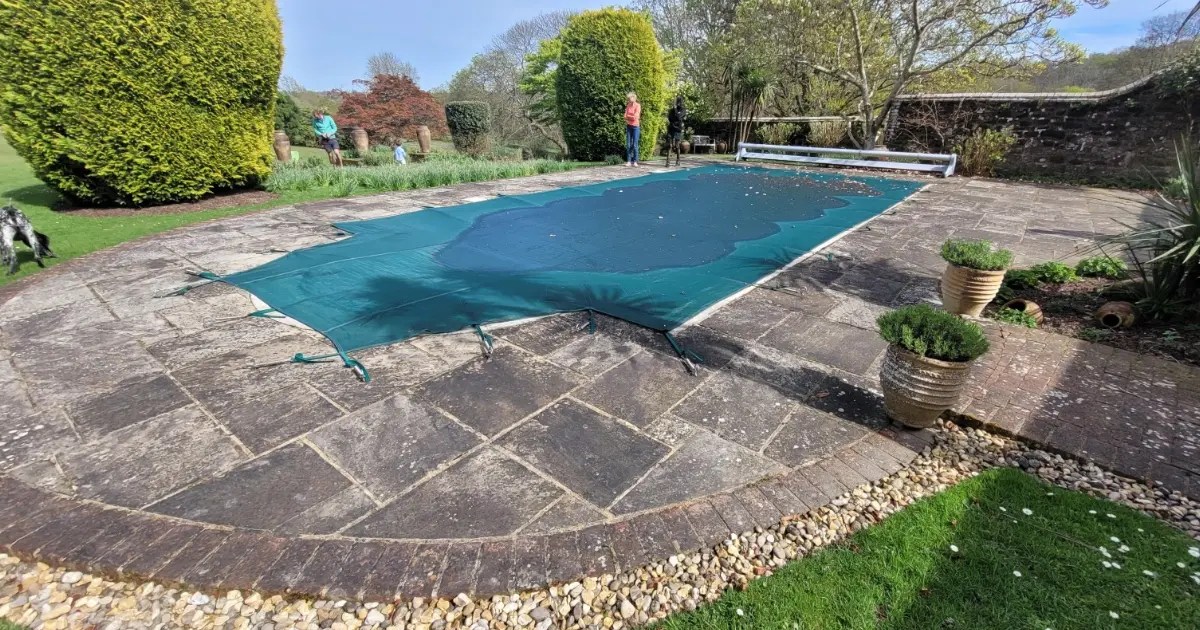
BEFORE & AFTER – NATURAL SANDSTONE SWIMMING POOL SURROUND
This natural sandstone pool surround was given a complete transformation ready for summer. The area was soft washed and carefully pressure cleaned, removing built-up dirt, algae and grime, before the joints were repointed to finish the job.
A fantastic transformation — wouldn’t you say?
BEFORE & AFTER – NATURAL SANDSTONE PATIO CLEANING


What a difference!
Years of dirt, algae and organic growth can completely disguise natural sandstone.
After careful cleaning and treatment, the natural colour and character of the stone can become visible again.
The results speak for themselves, wouldn’t you say?
THE BENEFITS OF PROFESSIONAL SANDSTONE CLEANING
RESTORES THE APPEARANCE OF THE STONE
Cleaning can dramatically improve the appearance of a tired sandstone patio, pathway or pool surround.
REVEALS NATURAL COLOUR
Removing surface contamination can reveal the natural tones and variations within the sandstone.
HELPS REMOVE ORGANIC GROWTH
Professional cleaning can remove moss, algae, lichen and other organic contamination that has built up over time.
HELPS IMPROVE SLIPPERY SURFACES
Removing moss and algae can help improve the condition of outdoor surfaces that have become slippery through organic growth.
IMPROVES THE OVERALL APPEARANCE OF YOUR PROPERTY
A clean patio, pathway or pool surround can make a noticeable difference to the appearance of an outdoor area.
CAN HELP YOU AVOID UNNECESSARY REPLACEMENT
If an old sandstone patio looks dirty and neglected, cleaning it properly may transform its appearance without immediately resorting to replacing the stone.
HOW OFTEN SHOULD NATURAL SANDSTONE BE CLEANED?
There is no single cleaning schedule that is right for every sandstone patio.
A shaded patio surrounded by trees may develop moss and algae much faster than a sunny, open patio.
Factors that can affect how quickly sandstone becomes contaminated include:
- Shade
- Trees and vegetation
- Moisture
- Drainage
- Weather conditions
- Foot traffic
- The surrounding environment
- Previous cleaning and maintenance
Some sandstone surfaces may benefit from regular annual maintenance, while others may remain in good condition for considerably longer.
Rather than automatically recommending a particular interval, I can advise you based on the condition of your sandstone.
CAN SANDSTONE BE SEALED AFTER CLEANING?
Depending on the type and condition of the sandstone, a suitable stone treatment or sealer may be considered after cleaning.
The suitability of sealing depends on the particular stone and what you want to achieve.
A treatment may help with future maintenance, but it is not a substitute for proper cleaning.
If sealing or protection is appropriate for your sandstone, this can be discussed after the surface has been assessed.
NATURAL SANDSTONE CLEANING ACROSS HAMPSHIRE
I provide natural sandstone cleaning and black spot removal services across Hampshire, including:
Southampton, Portsmouth, Winchester, Basingstoke, Andover, Eastleigh, Fareham, Gosport, Havant, Aldershot, Alton, Bordon, Botley, Chandler’s Ford, Fleet, Fordingbridge, Hedge End, Holbury, Hook, Horndean, Hythe, Lymington, New Milton, Petersfield, Romsey, Stockbridge, Tadley, Whitchurch, Beaulieu, Nether Wallop, Swanmore, Swanwick, Sarisbury, Bursledon and surrounding towns and villages.
If your particular Hampshire location isn’t listed, get in touch and ask.
WHY CHOOSE THE JET WASH FELLA FOR SANDSTONE CLEANING?
Natural sandstone deserves more consideration than simply treating it like a concrete driveway.
I take the time to assess the surface and use a cleaning method appropriate to the stone and its condition.
My approach includes:
- Careful inspection before cleaning
- Specialist cleaning treatments
- Soft-wash treatment where appropriate
- Controlled pressure cleaning
- Attention to stubborn black spots
- Moss, algae and lichen removal
- Care around delicate and weathered sandstone
- Avoiding unnecessary high pressure
- Attention to deteriorated joints
- Honest advice about what can realistically be achieved
- Pride in the finished result
The goal is not to make unrealistic promises.
It’s to clean your sandstone properly, protect its natural character and give you the best result that the condition of the stone allows.
FREQUENTLY ASKED QUESTIONS ABOUT SANDSTONE CLEANING
1. WHAT CAUSES BLACK SPOTS ON NATURAL SANDSTONE?
Black spots are commonly associated with organic growth, lichen, moisture, dirt and environmental contamination. Because sandstone is porous, these marks can become firmly established within the surface.
2. CAN YOU REMOVE BLACK SPOTS FROM SANDSTONE?
Yes, I can treat black spotting and stubborn organic contamination on natural sandstone.
The final result depends on the age and severity of the staining and the condition of the stone. Some areas may require more than one treatment.
3. CAN PRESSURE WASHING DAMAGE NATURAL SANDSTONE?
Yes, excessive pressure or the wrong cleaning technique can damage some sandstone surfaces.
Natural sandstone can be relatively soft, so I assess the material before cleaning and use controlled pressure rather than automatically using maximum pressure.
3. DO YOU USE A PRESSURE WASHER ON SANDSTONE?
Yes, where appropriate.
My sandstone cleaning process can combine specialist soft-wash treatment with carefully controlled pressure cleaning.
The pressure and technique are adjusted according to the type and condition of the sandstone.
4. DO YOU USE A ROTARY CLEANER ON NATURAL SANDSTONE?
I don’t automatically use a rotary surface cleaner on natural sandstone.
On softer or delicate sandstone, a controlled cleaning method can be more appropriate than aggressive mechanical cleaning.
5. CAN YOU REMOVE MOSS AND ALGAE FROM SANDSTONE?
Yes. Specialist cleaning treatments and controlled cleaning techniques can be used to remove moss, algae and other organic growth from natural sandstone.
6. CAN YOU REMOVE LICHEN FROM SANDSTONE?
Yes. Lichen can be particularly stubborn, so affected areas may require specialist treatment and additional cleaning.
7. CAN YOU CLEAN VERY OLD SANDSTONE?
Yes, but older sandstone needs to be assessed carefully.
Weathering, erosion, previous cleaning and the general condition of the stone can all affect the safest cleaning method.
8. CAN YOU CLEAN A SANDSTONE SWIMMING POOL SURROUND?
Yes. I provide natural sandstone swimming pool surround cleaning and can also assess deteriorated joints and pointing.
9. CAN YOU REPOINT A SANDSTONE PATIO?
Where appropriate, yes. If the existing joints have deteriorated, repointing or jointing can be discussed as part of the overall project.
10. WILL CLEANING BRING BACK THE ORIGINAL COLOUR OF MY SANDSTONE?
Cleaning can reveal a significant amount of the natural colour and character hidden beneath dirt, algae, moss and organic growth.
However, the final result depends on the condition and age of the stone.
11. HOW LONG DOES SANDSTONE CLEANING TAKE?
There is no fixed time because every job is different.
The size of the area, level of contamination, amount of black spotting and condition of the sandstone all affect the time required.
12. HOW OFTEN SHOULD MY SANDSTONE PATIO BE CLEANED?
There is no universal schedule.
Shaded and damp areas may require cleaning more frequently than sunny, well-drained areas.
I can advise you based on the actual condition of your sandstone.
13. DO YOU CLEAN SANDSTONE IN SOUTHAMPTON AND PORTSMOUTH?
Yes. I provide sandstone cleaning and black spot removal services throughout Hampshire, including Southampton, Portsmouth, Winchester, Basingstoke, Andover and surrounding areas.
14. DO YOU CLEAN OTHER EXTERIOR SURFACES?
Yes. Alongside natural sandstone cleaning, The Jet Wash Fella provides a range of exterior cleaning services including patio cleaning, driveway cleaning, decking cleaning, roof cleaning, conservatory cleaning, brick and stone cleaning, swimming pool surround cleaning and commercial pressure washing.
GET A QUOTE FOR NATURAL SANDSTONE CLEANING IN HAMPSHIRE
If your sandstone patio, pathway, driveway or swimming pool surround has become dirty, green, stained or covered in black spots, don’t automatically assume that the stone needs replacing.
It may simply need the right cleaning process.
At The Jet Wash Fella, I provide professional natural sandstone cleaning and black spot removal across Hampshire, using specialist treatments and controlled pressure cleaning to tackle years of accumulated dirt and organic growth.
If you’re wondering what can be achieved with your sandstone, send me some photographs of the area and tell me where the property is located.
I’ll take a look and give you an honest idea of what may be achievable.
THE JET WASH FELLA
NATURAL SANDSTONE CLEANING & BLACK SPOT REMOVAL
HAMPSHIRE • SUSSEX • SURREY
CALL: 07546 947214
EMAIL: TheJetWashFella@outlook.com
WEBSITE: thejetwashfella.uk
LET’S BRING YOUR SANDSTONE BACK TO LIFE.
Posts
Where we cover
Copthorne, Crawley,
Horsham, East Grinstead, Reigate, Redhill, and beyond.
Follow us
Facebook
Twitter
Instagram

This website was created by Design SEO Website.

