
Understanding the Different Types of Sandstone & Why Cleaning and Restoration Matters
At The Jet Wash Fella, we don’t just clean sandstone — we understand it. Sandstone is a natural stone. It is porous and relatively soft. It is used in patios, pathways, pool surrounds, and garden features across West Sussex and Surrey. Each type of sandstone has its own colour, texture, and level of durability. This means it requires a specialist approach to cleaning and restoration.
By recognising the different varieties of sandstone, we can ensure your outdoor spaces are restored to their true natural beauty. This process avoids damage.
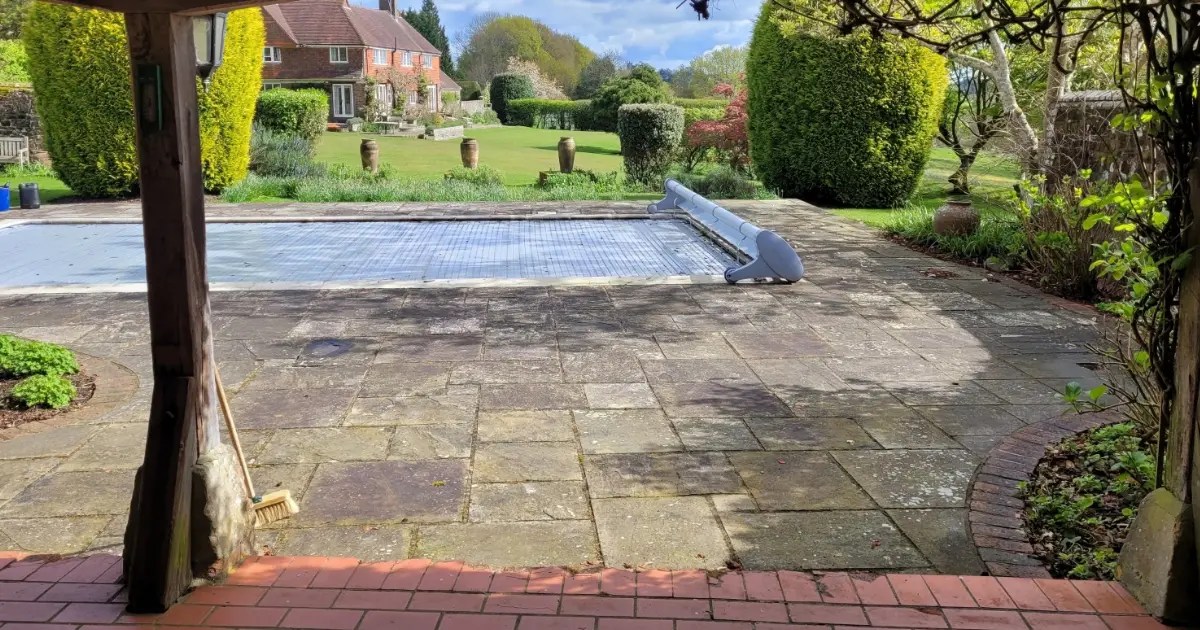

Common Types of Sandstone Used in Patios, Pathways & Outdoor Spaces
1. Indian Sandstone
Indian sandstone is one of the most popular choices in the UK for patios and pathways. It comes in a wide range of colours, including Raj Green, Autumn Brown, Kandla Grey, and Modak.
- Benefits: Affordable, attractive, available in various finishes.
- Cleaning Challenges: Prone to black spot, lichen, and algae because of its porous nature.
- Restoration Tip: Requires low-pressure cleaning and specialist treatments to lift stains and restore natural vibrancy.
2. Yorkstone
Yorkstone is a traditional British sandstone known for its durability and rich colour. Often used in heritage properties, pathways, and garden features.
- Benefits: Extremely hard-wearing, long lifespan, classic look.
- Cleaning Challenges: Can weather unevenly and collect moss, making surfaces slippery.
- Restoration Tip: Careful cleaning enhances its natural golden tones while maintaining historic value.
3. Kandla Grey Sandstone
Kandla Grey is a modern favourite. Its subtle silver-grey tones give patios and pool surrounds a sleek look. This creates a contemporary appearance.
- Benefits: Stylish, versatile, complements modern architecture.
- Cleaning Challenges: Grey tones make black spots, algae, and rust stains more visible.
- Restoration Tip: Professional cleaning restores colour and prevents the stone from looking dull.
4. Raj Green Sandstone
Raj Green is one of the most widely used Indian sandstone types, with green, brown, and grey hues. It blends well with traditional and countryside settings.
- Benefits: Warm, natural colour mix, rustic charm.
- Cleaning Challenges: Organic growth like lichen and algae often dulls its natural tones.
- Restoration Tip: Specialist soft washing brings back the stone’s earthy character.
5. Fossil Mint Sandstone
Fossil Mint sandstone is a unique type that features fossilised imprints and warm yellow-gold tones.
- Benefits: Distinctive appearance, natural beauty.
- Cleaning Challenges: Lighter shades show dirt, grime, and rust staining more easily.
- Restoration Tip: Regular cleaning keeps the stone’s decorative fossil markings clear and sharp.
6. Modak Sandstone
Known for its vibrant pink, red, and golden tones, Modak sandstone adds a warm, decorative feel to patios and pathways.
- Benefits: Striking colours, ideal for decorative outdoor areas.
- Cleaning Challenges: Bright tones can fade if not properly maintained, and algae growth dulls the surface.
- Restoration Tip: Careful restoration brings back its vivid colour palette.
7. Rippon Buff Sandstone
Rippon Buff is a multi-coloured sandstone with shades of brown, gold, orange, and grey.
- Benefits: Natural variation makes every patio unique.
- Cleaning Challenges: Variation in porosity can lead to uneven weathering and staining.
- Restoration Tip: Regular cleaning keeps colours vibrant and prevents patchy wear.
The Benefits of Professional Sandstone Cleaning & Restoration
Preserve Natural Beauty
Sandstone’s appeal lies in its natural tones and unique patterns. Over time, dirt, lichen, black spots, and algae cover its surface. Professional cleaning restores sandstone to its original vibrancy.
Protect the Stone’s Integrity
Because sandstone is porous and soft, using high-pressure washing can cause erosion, pitting, and long-term damage. Our gentle soft-wash restoration protects your investment.
Improve Safety
Slippery algae and moss build-up make sandstone pathways, patios, and pool surrounds unsafe. Cleaning eliminates these hazards, keeping outdoor spaces safe for your family and visitors.
Extend the Life of Sandstone
Routine cleaning and restoration prolongs the life of your sandstone, delaying costly replacements and maintaining property value.
Enhance Your Outdoor Lifestyle
A clean sandstone patio transforms your outdoor space. It makes it more enjoyable for entertaining, relaxing, or simply admiring your garden.
Areas We Cover for Sandstone Cleaning & Restoration
We provide sandstone cleaning and restoration across West Sussex. This includes Crawley, Horsham, Haywards Heath, Burgess Hill, Worthing, Chichester, Arundel, East Grinstead, and surrounding villages. We also cover Surrey, including Guildford, Reigate, Redhill, Dorking, Woking, Epsom, Leatherhead, Farnham, Caterham, Camberley, and beyond.
Why Choose The Jet Wash Fella?
- Specialist in gentle, stone-safe sandstone cleaning
- Experienced in restoring all types of sandstone
- Use of professional, eco-friendly products
- Serving homes across West Sussex and Surrey
- Free surveys and no-obligation quotes
Call Today for Sandstone Cleaning & Restoration in Sussex & Surrey
Whether you have Indian sandstone patios in Crawley, Yorkstone steps in Horsham, or Kandla Grey pool surrounds in Guildford, The Jet Wash Fella will restore them to their original beauty. Whether you have Indian sandstone patios in Crawley, Yorkstone steps in Horsham, or Kandla Grey pool surrounds in Guildford. The Jet Wash Fella will restore them to their original beauty. They can also restore Raj Green pathways in Reigate to their original beauty.
📞 Call us today or request your free no-obligation survey to discover how we can restore your sandstone safely, effectively, and beautifully.
GET IN TOUCH
Schedule a Visit
✅ 10 FAQs for Sandstone Cleaning & Restoration
1. How do I know what type of sandstone I have?
Sandstone comes in many varieties such as Indian sandstone, Yorkstone, Kandla Grey, Raj Green, Fossil Mint, Modak, and Rippon Buff. The easiest way to identify your sandstone is by its colour, texture, and natural markings. If you’re unsure, our experts at The Jet Wash Fella can assess your stone during a free survey.
2. Can sandstone be restored instead of replaced?
Yes — in most cases sandstone does not need to be replaced. Professional cleaning and restoration can remove black spots, algae, moss, lichen, and stains. This process restores its natural beauty. It does so without the cost of replacement.
3. Why is my sandstone patio covered in black spots and lichen?
Black spots and lichen grow on porous stones like sandstone because moisture gets trapped in the surface. These marks are very hard to remove with DIY methods. However, we use specialist treatments and soft washing techniques to eliminate them safely.
4. Is pressure washing safe for sandstone?
No. Sandstone is a soft, porous stone, and high-pressure washing can cause erosion, pitting, and long-term damage. We use low-pressure soft washing combined with stone-safe products to clean and restore your sandstone safely.
5. How often should sandstone be cleaned or restored?
For most patios and pool surrounds, every 1–2 years is recommended. If your sandstone is heavily shaded or damp, you may need more frequent cleaning. This is also true if it is near trees, to control moss and algae growth.
6. Can sandstone lose its natural colour over time?
Yes. Sun exposure, weathering, and organic growth like algae and lichen can dull the natural colour of sandstone. Professional restoration brings back the stone’s original tones and vibrancy.
7. Should I seal my sandstone after cleaning?
Sealing is optional but recommended. A breathable sandstone sealer helps reduce future staining, prevents algae and lichen regrowth, and makes ongoing maintenance easier.
8. What is the difference between Indian sandstone and Yorkstone?
Indian sandstone is typically imported and comes in colours like Raj Green, Kandla Grey, and Modak. Yorkstone is a traditional British sandstone, known for its durability and classic golden tones. Both are beautiful but require specialist care when cleaning.
9. Can you remove rust, oil, or BBQ stains from sandstone?
Yes — we offer targeted stain removal as part of our restoration service. Using specialist stone-safe products, we can remove rust marks, oil stains, food and drink spills, and other stubborn blemishes.
10. How much does sandstone restoration cost compared to replacement?
Restoration is far more affordable than replacement. Cleaning your sandstone can give it a like-new appearance. Restoring often saves thousands compared to lifting and replacing the stone. We provide free quotes so you know exactly what to expect.
GET IN TOUCH
Schedule a Visit
BLOG POSTS BY THE JET WASH FELLA
Pressure Washing Services in Redhill | Reigate
Professional pressure washing services in Redhill and Reigate by The Jet Wash Fella. Patios, driveways, decking and exterior surfaces cleaned safely and affordably. Free quotes from Matthew on 07546 947214.
Read More of The Jet Wash Fella's Posts
Sandstone Patio Cleaning Services in Guildford
I specialise in professional sandstone patio cleaning services in Guildford and surrounding areas. I use expert techniques and industry-grade equipment. My approach is carefully tailored to the unique needs of sandstone.
Read More of The Jet Wash Fella's Posts
Sandstone Patio Cleaning in Surrey – The Jet Wash Fella
Professional sandstone patio cleaning in Surrey by The Jet Wash Fella. Serving Guildford, Woking, Farnham, Dorking, Reigate, and beyond. Safe cleaning, black spot removal, sealing, and full patio restoration. Get a free quote today to revive…
Read More of The Jet Wash Fella's Posts
Natural Sandstone Cleaning Services in Hampshire Areas
Professional natural sandstone cleaning and black spot removal services in Hampshire. I safely clean and restore patios, pathways, driveways, and pool surrounds, removing moss, algae, lichen, and black spots. Serving Southampton, Portsmouth, Winchester, Basingstoke, Andover, and…
Read More of The Jet Wash Fella's Posts
Natural Sandstone Cleaning Services in Hampshire
Professional natural sandstone cleaning and black spot removal services in Hampshire. I safely clean and restore patios, pathways, driveways, and pool surrounds, removing moss, algae, lichen, and black spots. Serving Southampton, Portsmouth, Winchester, Basingstoke, Andover, and…
Read More of The Jet Wash Fella's Posts
Natural Sandstone Cleaning and Black Spot Removal Services in Hampshire
Professional natural sandstone cleaning and black spot removal services in Hampshire. I safely clean and restore patios, pathways, driveways, and pool surrounds, removing moss, algae, lichen, and black spots. Serving Southampton, Portsmouth, Winchester, Basingstoke, Andover, and…
Read More of The Jet Wash Fella's Posts
Jet Washing and Exterior Cleaning Services Hampshire
Professional jet washing and exterior cleaning services across Hampshire. I clean driveways, patios, decking, and natural stone, removing moss, algae, and dirt safely. Serving Southampton, Portsmouth, Winchester, Basingstoke, Andover, and all surrounding towns and villages.
Read More of The Jet Wash Fella's Posts
Jet Washing and Exterior Cleaning Services in Hampshire
Professional jet washing and exterior cleaning services across Hampshire. I clean driveways, patios, decking, and natural stone, removing algae, moss, and dirt safely. Serving Southampton, Portsmouth, Winchester, Basingstoke, Andover, and all surrounding towns and villages.
Read More of The Jet Wash Fella's Posts
Porcelain Tile Cleaning Services in Sussex and Surrey
Professional porcelain tile cleaning services in Sussex and Surrey by The Jet Wash Fella. Gentle low-pressure cleaning restores patios, pathways, and pool surrounds, removing algae, moss, and slippery surfaces. Covering Crawley, Horsham, Guildford, Woking, and all…
Read More of The Jet Wash Fella's Posts
PROS AND CONS OF HAVING PORCELAIN TILES LAID FOR YOUR GARDEN PATIO
Discover low-maintenance, slip-resistant porcelain tiles perfect for garden patios. Stylish, weatherproof, and built to last. Free expert advice available.
Read More of The Jet Wash Fella's Posts
Tips to Sell Your Property Faster in Sussex & Surrey with Professional Cleaning
Tips to Sell Your Home Faster in Sussex and Surrey with Exterior Cleaning Experts. Boost kerb appeal and property value with driveway, patio, decking & sandstone cleaning in Sussex and Surrey. The Jet Wash Fella helps…
Read More of The Jet Wash Fella's Posts
How to Sell Your Home Faster and for More Money with Professional Exterior Cleaning
How to Sell Your Home Faster and for More Money with Professional Exterior Cleaning… Boost kerb appeal and property value with professional exterior cleaning in Sussex and Surrey. Driveway, patio and sandstone restoration by The Jet…
Read More of The Jet Wash Fella's Posts
Professional Natural Sandstone Cleaning / Restoration Services in West Sussex and Surrey
Professional sandstone cleaning and restoration across West Sussex and Surrey. Gentle soft-wash for patios, pool surrounds, pathways, and garden features. Free quote.
Read More of The Jet Wash Fella's Posts
Natural Sandstone Restoration Surrey | The Jet Wash Fella
Specialist sandstone restoration in Surrey. Gentle patio, pool surround and pathway cleaning. Black spot & lichen removal. Free survey and quote.
Read More of The Jet Wash Fella's Posts
Sandstone Restoration West Sussex | The Jet Wash Fella
Specialist sandstone restoration in West Sussex. Gentle patio, pathway and pool surround cleaning with black spot and lichen removal. Free quotes.
Read More of The Jet Wash Fella's Posts
Natural Sandstone Cleaning Services in Surrey
Specialist natural sandstone cleaning in Surrey. Gentle patio, pool surround and pathway restoration. Black spot and lichen removal. Free survey and quote.
Read More of The Jet Wash Fella's Posts
Natural Sandstone Cleaning in Crawley, West Sussex & Surrey
Using low-pressure cleaning techniques combined with specialist sandstone-safe products, we can remove even the toughest stains and organic growth while protecting the delicate stone beneath.
Read More of The Jet Wash Fella's Posts
PATIO CLEANING SERVICE WEST SUSSEX | PATIO WASHING
Expert patio cleaning in West Sussex by The Jet Wash Fella. We clean block paving, stone, concrete and more in Crawley, Horsham, Chichester and all surrounding towns in West Sussex.
Read More of The Jet Wash Fella's Posts
PATIO CLEANING SERVICE WEST SUSSEX
Professional patio cleaning services in West Sussex by The Jet Wash Fella. We clean block paving, natural stone, and all patios. Covering Crawley, Worthing, Chichester, Horsham and more.
Read More of The Jet Wash Fella's Posts
DRIVEWAY CLEANING REDHILL
Professional driveway cleaning in Redhill by The Jet Wash Fella. Expert jet washing for block paving, concrete, tarmac & more. Free quotes, fully insured, local RH1 service.
Read More of The Jet Wash Fella's Posts
The Jet Wash Fella – Weed Control Solutions – Pressure Cleaning & Jet Washing Service – Roof Top Cleaning – Driveway Cleaning – Patio Cleaning – Brick & Stone Cleaning – Timber Decking & Fencing Cleaning – Car Park Cleaning – Swimming Pool Surrounds Cleaning – Conservatory Cleaning – Skylight Cleaning – High Rise Building & Factory Cleaning.
THE JET WASH FELLA
Your local jet washing and pressure
washing service
Where we are
Bewbush,
Crawley,
West Sussex.
Follow us
Facebook
Twitter
Instagram

This website was created by Design SEO Website.
sandstone cleaning and restoration across West Sussex — including Crawley, Horsham, Haywards Heath, Burgess Hill, Worthing, Chichester, Arundel, East Grinstead, and surrounding villages — and Surrey, covering Guildford, Reigate, Redhill, Dorking, Woking, Epsom, Leatherhead, Farnham, Caterham, Camberley, and beyond.
 THE JET WASH FELLA